
Solana’s Latest Network Outage Raises Questions About Decentralized Scalability
26 January 2026
Unexpected Transaction Flood Triggers Consensus Slowdown
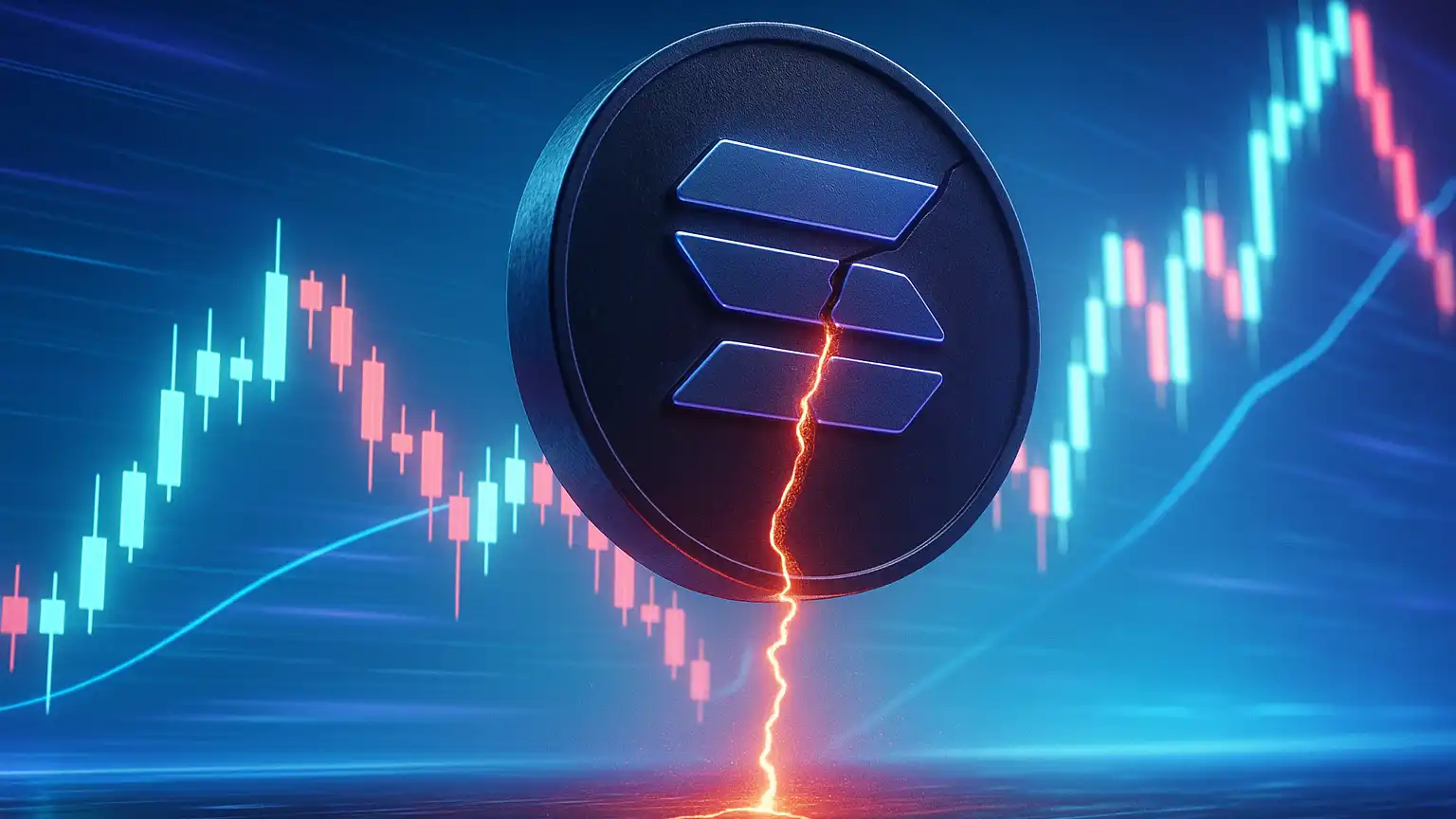
In the early hours of last week, Solana’s network experienced a sudden influx of transactions tied to a popular meme token launch, resulting in a near-complete stall of block production. This extreme surge overwhelmed Solana’s signature Proof of History (PoH) based pipeline, where validators rely on tightly synchronized timestamps to order events. As consensus nodes scrambled to process thousands of incoming messages per second, memory constraints and CPU saturation led to repeated validator restarts. Although automated restart scripts eventually restored quorum, the interim freeze lasted over two hours, exposing the fragility of equating high throughput with robustness.
Observers noted that the network’s aggressive block times—hovering around 400 milliseconds under normal conditions—became its Achilles’ heel when traffic spiked. Unlike proof-of-work chains that slow gracefully under duress, Solana’s validator set requires near-instant coordination. When a handful of nodes fell behind, the entire cluster paused to re-establish a single source of timestamp truth. That architectural choice, optimized for speed, now faces scrutiny as more decentralized projects must weigh raw transactions per second against continuous availability.
Stakeholder Reactions Highlight Trust and Reliability Challenges
The outage prompted an immediate backlash from institutional investors and retail holders alike, with social media channels ablaze with concerns over funds locked in decentralized exchanges mid-freeze. Several large staking pools saw withdrawal requests spike as delegators questioned whether Solana’s nodes could sustain future demand. Market makers, who rely on predictable transaction finality, began rerouting order flow to alternative layer-one networks for critical periods. While Solana’s native token dipped by nearly 15% in the aftermath, insiders worry that repeated disruptions could erode trust faster than any network upgrade can restore it.
At the same time, core developers and ecosystem partners rallied around emergency patches, emphasizing that no chain is immune to stress without continuous optimization. The Solana Foundation released a detailed post-mortem within 48 hours, promising adjustments to transaction rate limits, refined priority fees, and improved monitoring dashboards for validator operators. Yet the broader debate has shifted: should Solana remain laser-focused on peak performance benchmarks, or should it pivot toward conservative resilience measures even at the expense of maximum throughput?
Validator Node Overloads and Emergency Updates
In response to the incident, node operators implemented a stopgap measure that dynamically adjusts the threshold for chunk retransmission during mempool congestion. By temporarily disabling certain speculative execution paths and increasing the allowed window for block propagation, validators can now prioritize stability over speed. However, this approach introduces additional latency under stress, inviting fresh questions about Solana’s positioning as the fastest blockchain.
Comparative Analysis with Other Layer-One Networks
When benchmarked against rivals like Avalanche and Polkadot, Solana historically outpaces them in raw throughput but lags in consensus resilience. Avalanche’s gossip-based subsystem and Polkadot’s sharded Relay Chain deliver more graceful degradation during peak load, albeit with slower nominal block times. Even Ethereum’s sharding and Layer 2 rollups, while complex, offer an incremental upgrade path that prioritizes uptime. The contrast underscores a broader trade-off in decentralized architecture: whether to chase the highest possible TPS figure or embrace a design that can weather unpredictable demand without halting.
Moreover, the outage brings renewed attention to emerging chains such as Aptos and Sui, which tout modular execution environments and parallel transaction processing. Their emphasis on separating consensus from execution promises finer-grained fault tolerance, and could influence how Solana formulates its next major release. In a sector where narrative often drives capital flow, the perception of reliability can be as potent as raw performance metrics.
Looking Ahead: Paving the Path Toward Solana 2.0
Solana’s engineering roadmap now centers on a holistic “availability-first” philosophy, acknowledging that real-world usage patterns rarely mirror controlled testnets. The team has committed to rolling out incremental runtime upgrades that throttle transaction acceptance based on network health indicators, alongside enhanced telemetry to preempt stalls before they cascade. Community governance forums are also debating proposals for on-chain rate-setting mechanisms, allowing real-time adjustment of gas fees to reflect congestion and deter spam.
Architectural Upgrades and Sharding Considerations
Looking further ahead, Solana’s core architects are exploring state sharding to partition ledger data across subnetworks, alleviating the coordination burden on individual validators. By introducing horizontal scaling layers—where independent shards process subsets of the transaction load and periodically synchronize summaries—Solana could maintain its signature block times while dramatically improving fault containment. Coupled with advancements in zero-knowledge proof techniques for cross-shard settlements, these innovations may redefine what a high-performance, resilient layer-one blockchain can achieve.